We began our second full day in the Hoi An area at 5:00 a.m., with a private guided tour to the nearby My Son ruins, the remnants of Champa empire (circa 700 AD to 1l00 AD), which was of Javanese Hindu origins. The hotel concierge had arranged this tour for us on the spur of the moment the day before. I was and am amazed at the extremely high quality of the concierge services at our hotels in Vietnam -- they have serving tourists down to a science, with really wonderful offerings and great focus on customer enjoyment.
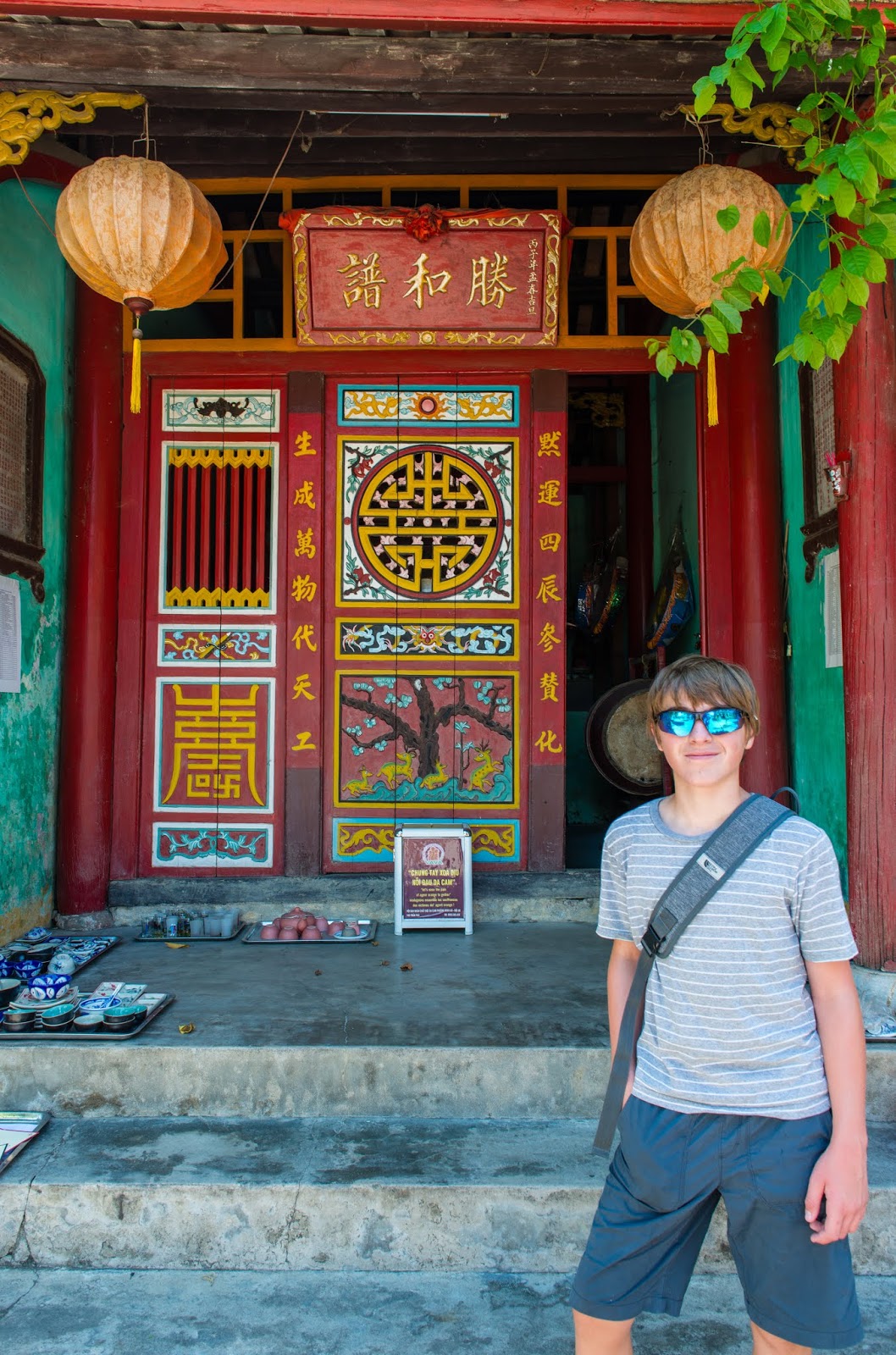
The hotel had selected a gentleman named Van as our guide, and he was just excellent. At 72 years old, he was spry and his English was very good. Here he is showing us where we are headed at the entrance of the My Son ruins. He also served as our photographer on a number of the pictures here.


As we walked through these ruins, which we had all to ourselves, Van told us his amazing back-story. As a young man, he had watched the US marines when they first came ashore in the DaNang area, on China Beach. They were huge in comparison to most Vietnamese, with grenades festooning their vests, rifles and machine guns on their backs, and faces serious as death. Everyone was so scared of them. But then one of the Marines, who spoke Vietnamese very well, walked up and handed him a Hershey bar and some gum. From that point on he was determined to learn English so that he could ask for more. As you would expect if you know anything about the Vietnamese people, Van worked incredibly hard to learn, and eventually became an interpreter for American forces, who he said treated him very well.

During the conflict, his brother, who was simply a policeman with no connection to the Americans, was assassinated by communist guerrillas, in his own bed, lying next to his pregnant wife. Van is still saddened and shocked by that event. When things finally fell apart for the south, he was in Saigon and his wife was in Hoi An. The Americans offered to take him with them as Saigon was falling, but he told them he needed to get his wife first. They said to hurry, because there was not much time. He raced north, but the roads were already blocked by communist forces, and he had to remain. That earned him 2 years in a communist "re-education" prison. There was no contact with his wife at all, and when he was finally let out to go become a manual laborer in farming, he went home first for a visit. His wife did not even recognize him -- he had lost so much weight. He was required to spend the next 10 years doing hard labor on the farm, and was prohibited thereafter from joining the communist party, which meant he could not get any of the good jobs. He struggled to support his family.

Then in 1994, President Clinton lifted the embargo on Vietnam (with John McCain's help and blessing), and it totally changed his life. Tourists began to come, and his knowledge of English helped him secure good-paying employment as a translator. He is now happy and content with his life. I asked him how he felt about the whole thing and his country now, and he hinted that people from the south still resent people from the north, but noted that Vietnam was more open than China, even though it was subject to one party rule. "We have Facebook, and they don't," he said. It was simply wonderful to spend the day with him, and to hear his story. It made me think about how we as a country impact so many places, near and far, for good and ill, and how careful we should be in wielding that influence.
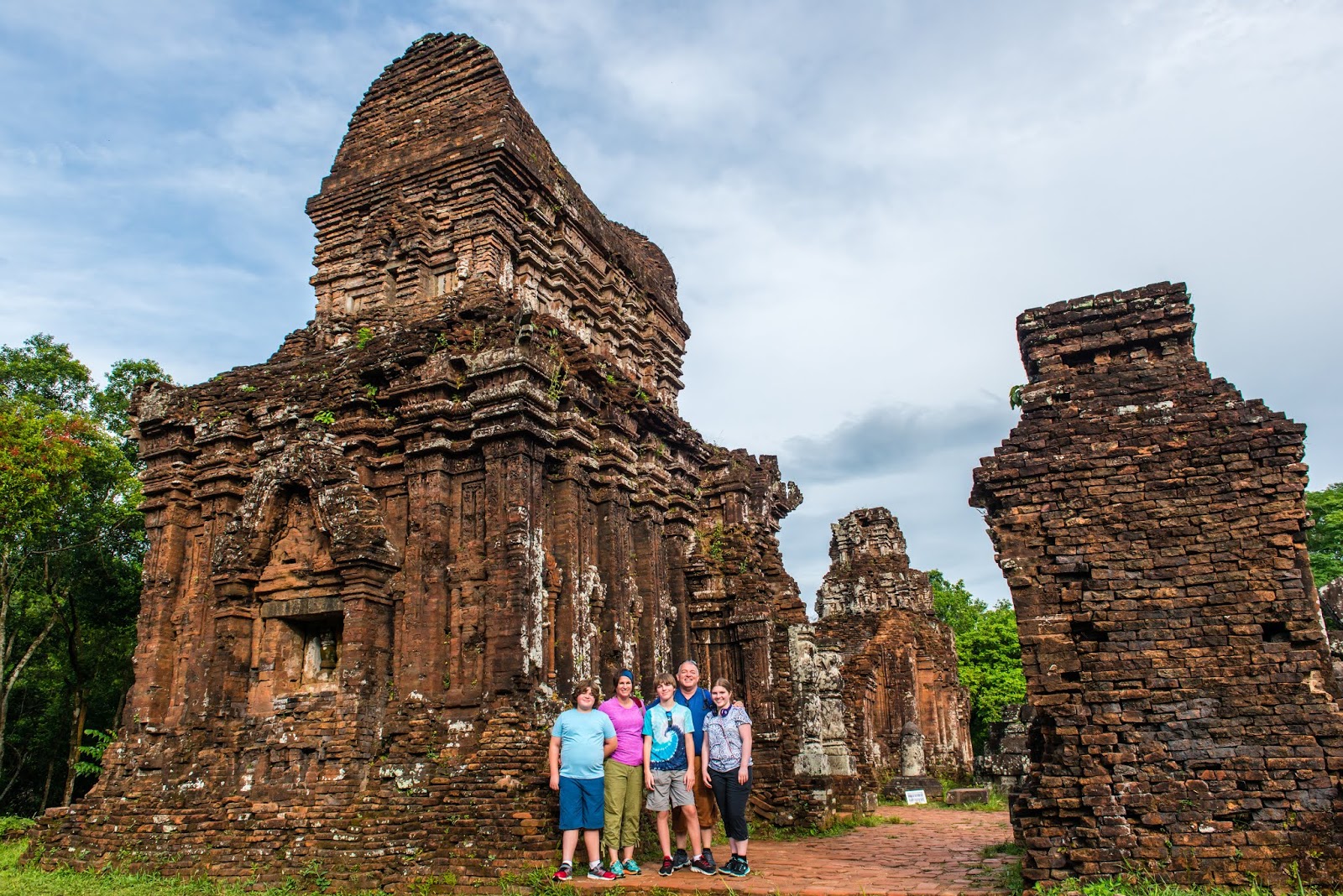
The ruins themselves were also fascinating, and had their own complaints to make about the Vietnam War. They are from the same era and culture that produced famous Borobudur in Indonesia -- Hindu in origin, with all of its many armed and mystical part-animal gods. Here are some pictures to give you a sense of how alone we were and some of the things we saw on our morning tour (with two exceptions that were taken in a museum we toured later-- but which were found at the ruins):


They also apparently revered the female breast -- completely understandable and defensible 👀😱😀, but something we will not go into here.


As Van took us around, he explained that during the Tet Offensive, the Vietcong had used the ruins as a secret base, with anti-aircraft emplacements around it. This of course caused the Americans to bomb the ruins, and the remains of craters are still visible. A few of the ruins even took direct hits.


That was a sad thing for us to hear, on this beautiful and tranquil morning, with nothing but the sounds of cicadas and birds surrounding us, and delicate mimosa flowers opening and then closing at our lightest touch, while walking through shades of the most peaceful greens.


As we left the ruins and headed for the Thu Bon River and a boat ride back into the city, we thought about all the life that must have lived in this place, gone now and remembered only by these few remains of buildings. It gave us a sense of how temporary things can be, and how so much of what seems so important right now will pass, just like the Champa, into the mists of memory and relic, like ghosts in the imagination of some future we can't envision. And that is why we visit these places, to remember our humility, and to recall what is really important -- making the most of our time here with the ones we love.


The boat ride back was peaceful, and lunch awaited us at the Green Mango, with an afternoon full of trying on our tailored clothes and shoes (the latter were fantastic) and getting caught in a deluge the likes of which I have never seen. Fortunately, that lead to a little down time with Alden and I watching Star Trek Discovery -- huge bonus, as he became a fan of the universe I love so much. As the rains abated, we headed straight back for Vy's Kitchen, where an amazing smoked egg plant, Cau Lau pork, pork-belly claypot and shrimp and pork dumplings awaited us. SOOOO good. We topped it off with passion fruit ice cream, and headed off to bed, in preparation for our last morning in this delightful place.
As morning broke, we took a quick trip toward DaNang, and a place called Marble Mountain. They were not kidding with that title. It is part of a series of stone mountains made of marble and other rocks, the marble having been mined for centuries, leaving caves and hollows to be explored. It was touristy but interesting nonetheless. Here are some pictures:

At the top, looking down into the suburbs of DaNang.

There were gardens and fountains and monasteries of sorts built into the mountain.


The tile on that roof is actually marble. As we walked (read climbed), we could see where the marble had been carved away from the large pillar of stone we climbed.


I have to say, these folks are pretty pleasant looking for the heat they are enduring. I don't think I have ever been hotter than I was at the top of this climb. The air was still and humid, it was easily over a hundred degrees, and I am sure I was at risk of heat stroke almost from the first step.

When we finally got to the top, we could see both China beach and this view of the bustling and modern city of DaNang. I would bet GIs would be surprised at the way it looks today, so modern and (dare I say) capitalistic. Commerce is what it is all about, and you would never know, looking at it, that this was a battle zone, on the border between north and south, and near the scene of some of the heaviest fighting of the Vietnam War.
Having exhausted ourselves in the heat, we headed back for a last quick stop at China Beach, a beautiful stretch of coastline running all the way from DaNang to Hoi An.


It would have been nice to stay, but we had flight reservations for another beach -- this one in Bali, Indonesia, where we would find temperatures much more to our liking (think Hawaii on a perfect day).
Reflecting on our trip to Vietnam, I would say two things about it to anyone: (1) just go, it is amazing and easy; and (2) try to go during a cooler part of the year than July. Nevertheless, it is worth doing at any time in my view. Food is just exceptional. Hotel accommodations are small but relatively inexpensive and extremely high quality, with services that really enhance your stay. The scenery is beautiful. And the people are stunningly friendly and fun - just a great place all the way around. If it wasn't for the heat, our kids would have loved it a lot more, but they still enjoyed the time there. Alden really expanded his food horizons, the kids all got new clothes that fit (at least for the next couple of months -- teenagers!) and it was a great bonding time for our little troop! We will be back some day, as there is so much to see.